
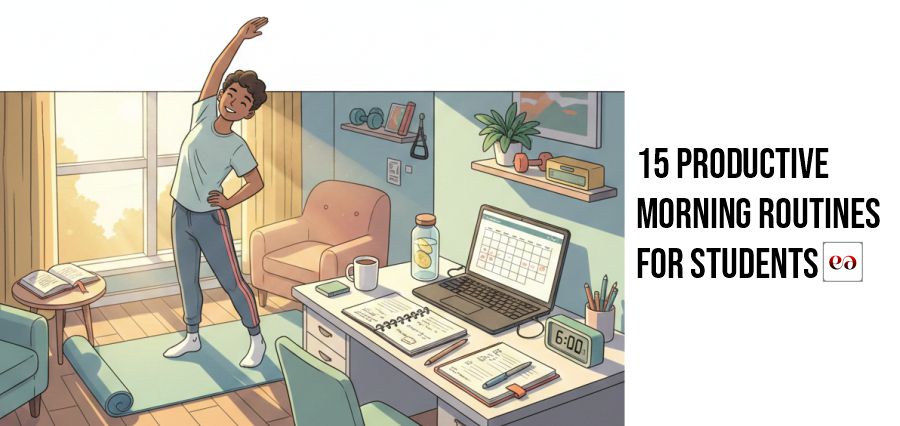
A strong morning routine sets the tone for the entire day. Students juggle classes, deadlines, friendships, and big dreams. Mornings can either become rushed and stressful, or intentional and steady. The difference often comes down to a few simple habits practiced regularly. Let us break it down. When you start your day with clarity, your brain warms up faster, your motivation stays higher, and your ability to manage distractions improves.
This guide shares 15 productive morning routines designed specifically for students. Each one is practical, realistic, and easy to maintain. You do not need perfection. You only need consistency. Start small, keep going, and adjust as you learn what works best for you.
A predictable morning pattern builds mental readiness. It helps your brain shift from sleep mode to learning mode. Students who follow a morning routine often experience:
When mornings are intentional, the entire day follows with more structure. You begin to feel prepared instead of reactive.
A routine that is unrealistic will collapse within days. A routine that fits your lifestyle will last for years. Start with two or three habits from this list. Practice them for two weeks. Once they feel natural, add another.
The goal is not perfection. The goal is progress that you can sustain.
Consistency trains your internal clock. Your body begins to feel alert naturally. Choose a realistic wake up time that supports your schedule. Avoid constantly changing it. Over time, you will fall asleep faster and wake up with more energy.
Social media, messages, and notifications hijack attention. Your brain wakes up reacting instead of thinking. Give yourself twenty quiet minutes to orient your mind. Use that window for reflection, stretching, or journaling instead.
Your brain is nearly seventy percent water. After hours of sleep, hydration drops. A simple glass of water boosts alertness, digestion, and circulation. It is one of the easiest ways to feel awake without caffeine.
It may feel small, but it signals completion. One finished task creates momentum. Your room looks cleaner. Your mind feels more organized. Productive days often begin with tidy spaces.
Call it meditation, mindfulness, prayer, or silent breathing. The label does not matter. The stillness does. Five calm minutes create mental clarity. Thoughts untangle. Anxiety slows down. Decisions feel easier through the day.
Your body stiffens overnight. Stretching improves circulation and wakes your muscles. You do not need an intense workout. A simple routine like neck rolls, shoulder stretches, and a short walk can reset your energy. Movement creates alertness far better than coffee ever will.
Skipping breakfast can cause fatigue and brain fog. Choose foods that provide steady fuel. Examples include oats, eggs, fruit, yogurt, or whole grain toast. Think balanced, not complicated. The goal is sustained focus, not a sugar rush.
Students often feel overwhelmed because everything sits in the mind at once. Write down your top three tasks for the day. Keep the list realistic. When you identify priorities early, procrastination loses power. You begin the day already knowing what matters.
Ten minutes of reading can shift your mindset. You might read a motivational passage, a textbook summary, or an article linked to your subject. Reading stretches your thinking and warms up your brain for learning. Small daily reading builds long term knowledge.
Take a notebook and write three things you are grateful for. Keep it simple. A supportive teacher. A friend who listens. A roof over your head. Gratitude builds emotional resilience. It turns your focus toward what is working instead of what is missing.
Close your eyes and picture yourself moving through the day calm and confident. See yourself answering questions in class, submitting assignments, and staying focused. Visualization programs the brain toward success. Athletes use it. Students benefit from it just as much.
Spend five minutes glancing through key points from lectures or textbooks. This reinforces memory by repetition. Your brain recognizes the material again and stores it more deeply. Regular quick revision removes last minute panic before exams.
Many students depend on coffee the moment they wake up. Too much caffeine creates jitters, crashes, and poor sleep. Try drinking water first, then have a small coffee or tea after breakfast if needed. Your natural energy system becomes stronger.
Sunlight signals your brain to produce hormones that regulate focus and mood. A few minutes outdoors can improve alertness and emotional balance. Fresh air clears the mind. Even a short walk around your home or campus can reset your outlook.
Students often wake up with stress or self doubt. Create one sentence that reinforces your belief in yourself. For example:
I am capable.
I can handle today.
I am learning and improving.
Repeat it slowly. Self talk influences performance more than most people realize. A supportive inner voice builds long term confidence.
Every student lives differently. Hostels, family life, online classes, travel, and part time work all shape your mornings. Personalize your routine so it feels achievable.
The key is alignment. Your routine must support the lifestyle you actually live, not an idealized version.
Real growth happens gradually. Small habits compound. Over time they shape stronger discipline and clearer thinking.
A stable morning routine builds self trust. You start to believe in your ability to manage life. Classes feel manageable. Stress becomes lighter. Focus strengthens. You stop running behind time and begin directing it.
Students who master mornings often notice improvement in academic results, mental health, and motivation. Success stops feeling accidental. It begins to feel intentional.
You deserve mornings that feel calm, steady, and purposeful. Choose two of these routines today. Practice them until they become natural. When they do, add another. Over time, you will build a morning rhythm that supports learning, creativity, and resilience.
Your routine does not need to look perfect to work. It only needs to belong to you.

Welcome to the future of digital storytelling, where creativity meets innovation. We’re not just a magazine platform; we’re a team of passionate visionaries committed to transforming how stories are shared, celebrated, and experienced in the digital age. Join us as we inspire, inform, and redefine the world of digital magazines.
© Copyright 2025 | educationeureka | All Rights Reserved.