
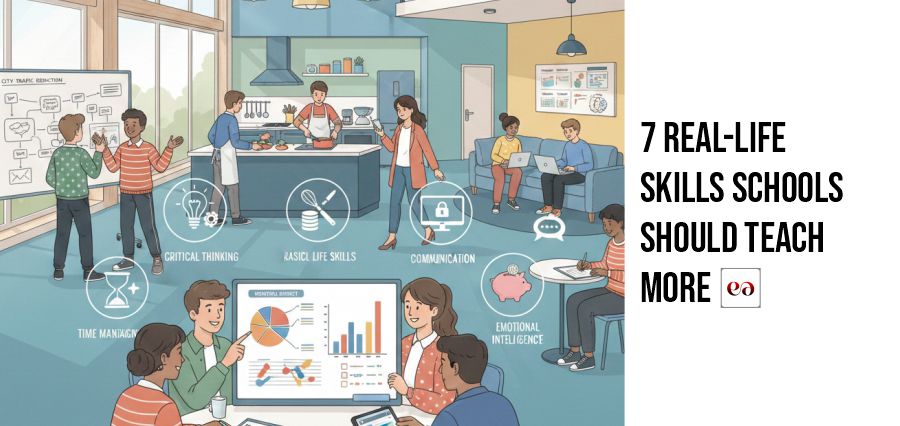
Every generation of students walks out of school prepared for tests, assignments, and exams. Yet too many walk into adulthood unprepared for everyday challenges that matter most. Schools have long focused on academic knowledge. What they often miss are the real-life skills that help students navigate careers, relationships, personal finances, and emotional health. Life skills are not optional extras. They are essential tools for success after school.
Here are seven real-life skills schools should teach more, not someday, but now.
Understanding money is no longer optional. Too many adults learn budgeting, saving, credit, and taxes the hard way: through anxiety and mistakes.
Financial literacy should be part of the school curriculum from early grades onward. Students need hands-on lessons in budgeting, bank accounts, interest, and responsible borrowing. These are not abstract concepts. They determine whether a young adult saves effectively, avoids crippling debt, and plans for long-term goals like college or a home.
When schools teach financial literacy, students enter adulthood with confidence instead of fear. They understand how decisions today shape financial stability tomorrow. Tools like classroom economies or real budgeting projects can make money concepts relatable and practical.
Strong communication skills change lives. They determine whether a student can express ideas clearly, listen actively, and resolve conflicts respectfully. In a world where text messages often replace face-to-face interaction, interpersonal skills matter more than ever.
Communication is the foundation of relationships, leadership, and collaboration. Yet schools focus heavily on grammar and writing assignments without teaching how to communicate in real situations, public speaking, negotiation, conflict mediation, or networking.
Debate clubs, presentations, and team projects help, but schools should also integrate communication across subjects. Students need practice giving and receiving feedback, engaging in civil discourse, and listening with empathy. When they do, their confidence grows and their relationships improve, both personally and professionally.
Emotional intelligence goes far beyond “being nice.” It is the ability to understand and manage emotions, your own and others’. It underpins every human interaction and supports mental well-being.
Young people today face stress, pressure, and social challenges unseen by past generations. Learning how to identify emotions, regulate responses, and support peers can reduce anxiety and build resilience. Schools are beginning to embrace social-emotional learning, but it must go deeper and be universal.
Regular lessons in self-awareness, stress management, empathy, and coping strategies help students handle setbacks without falling apart. These skills improve classroom behavior, reduce bullying, and foster a more supportive school environment.
Without emotional literacy, students may achieve academically yet struggle with relationships, job challenges, and daily life pressures. That is why emotional intelligence deserves a central role in education.
Textbook learning can teach facts. Real life demands decisions. The world moves quickly. Students need the ability to think clearly, assess situations, and make good choices.
Critical thinking is not just “thinking hard.” It means questioning assumptions, evaluating evidence, exploring alternatives, and making thoughtful decisions. Schools that foster these skills give students the tools to approach unfamiliar problems with confidence.
Problem solving should appear in math, science, social studies, and real-life projects alike. Whether tackling a group design challenge or analyzing a community issue, students learn that every problem has more than one solution.
These skills are essential in careers and everyday life. Employers value people who think independently, adapt to change, and solve new problems — something traditional testing rarely measures.
Most students never learn how to manage time effectively. They cram before tests, procrastinate, and juggle assignments at the last minute. In adulthood these habits translate into missed deadlines, stress, and burnout.
Time management is a learned skill. It is about prioritizing tasks, planning ahead, and balancing responsibilities in a way that prevents overwhelm.
Schools can teach time planning tools, project deadlines, prioritization methods, and organization techniques. Students who learn to schedule work, break large projects into smaller steps, and manage distractions will enter the workforce with a huge advantage. They will meet deadlines comfortably rather than by luck.
Organization also extends to physical space, digital files, and routines. These habits build consistency and reduce chaos in academic and personal life alike.
Health matters. Yet many students reach adulthood without understanding basic nutrition, personal health, or self-care.
A life skills curriculum should include nutrition and healthy habits, how the body works, and how small daily choices affect long-term wellness. Students need practical lessons, not just facts. Cooking, meal planning, and understanding energy balance matter more than memorizing biology terms.
Self-care includes sleep habits, stress reduction, and recognizing when to seek help. Too many young people struggle silently until stress becomes a crisis. Schools should teach how to maintain physical and emotional health in ways that fit real schedules and real challenges.
When students understand their bodies and minds, they can make choices that support long, productive lives.
The digital world has become part of life. Students spend time online for school, social connection, and work. Yet most never receive real instruction on how to use technology safely and responsibly.
Digital literacy goes beyond knowing how to use apps. It includes understanding privacy, security, misinformation, online reputation, and ethical behavior. Students must learn how to evaluate sources, protect personal information, and navigate digital spaces thoughtfully.
Teaching digital citizenship equips students to communicate responsibly online, recognize manipulated media, and safeguard their digital identities. In a world where so much interaction happens online, this skill protects students socially, academically, and professionally.
The argument is not that schools should replace academics with life skills. The point is integration. Life skills should be taught with academic learning, not after it. Schools that weave real-world skills across subjects prepare students for life after graduation, not just the next exam.
Some schools already lead the way. Programs focused on emotional wellbeing, problem solving, and experiential learning show students not only what to learn, but how to live well.
The world is changing rapidly. Jobs that exist now may not in a decade. What stays constant is the need for human skills that help students adapt, think, communicate, and persist. A well-rounded education bridges knowledge with real-life application.
Schools today have an opportunity. They can continue teaching subjects that fill textbooks. Or they can expand learning to include skills that prepare students for the realities of adulthood.
When schools teach financial literacy, communication, emotional intelligence, critical thinking, time management, health fundamentals, and digital literacy, students walk out ready not just for college or a job, but for life.
This is not wishful thinking. It is a clear and achievable shift. Employers, families, and communities agree on the value of these competencies. What schools need now is the will to make them essential, not optional, in every child’s education.

Welcome to the future of digital storytelling, where creativity meets innovation. We’re not just a magazine platform; we’re a team of passionate visionaries committed to transforming how stories are shared, celebrated, and experienced in the digital age. Join us as we inspire, inform, and redefine the world of digital magazines.
© Copyright 2025 | educationeureka | All Rights Reserved.