
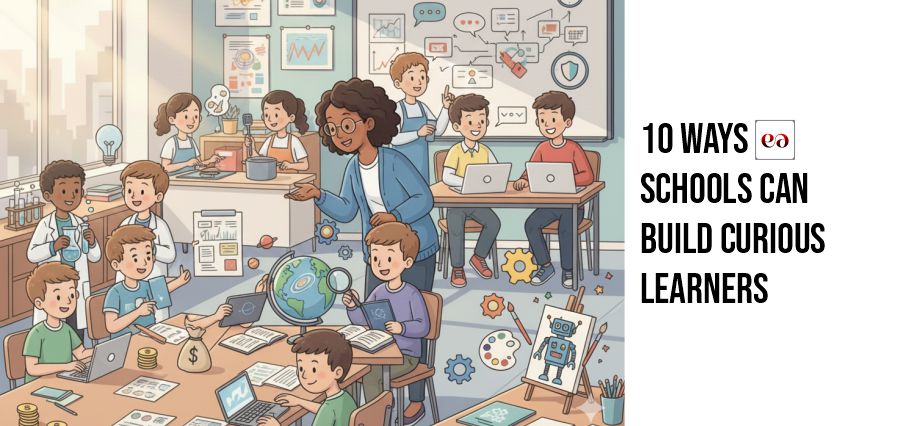
Curiosity is not a luxury. It is the foundation of deep learning and lifelong success. Schools can be places where students ask questions, explore ideas, and build knowledge with confidence.
This article shares ten proven ways schools can build curious learners. Each strategy is clear and practical. It is designed to help educators, leaders, and policymakers put curiosity at the center of learning.
Curiosity drives students to explore concepts beyond what is required. When schools foster curiosity, students engage more deeply with content. They question assumptions and apply learning to new situations. Research shows that students who are curious are more motivated, retain knowledge longer, and perform better academically and creatively.
Curious learners do not just memorize facts. They seek meaning. They ask why things matter and how ideas connect. Curiosity prepares students for jobs that do not yet exist and challenges that require innovation.
A culture that celebrates questions changes everything. Questions are signs of thinking. Schools that praise questions send a clear message. It is okay not to know. It is good to ask. Teachers can model curiosity by asking open-ended questions in class. Leaders can feature questions in assemblies, newsletters, and school walls.
Start by setting norms around questions. Ask students to write questions before lessons. Highlight the most thoughtful questions at the end of the week. When students see questions valued, they begin to value inquiry.
Real world problems spark curiosity. Instead of teaching isolated facts, schools can present students with challenges that matter. For example, ask students how to reduce litter in the school grounds or how to explain the water cycle to young children.
Authentic problems have no single answer. They force learners to explore, test ideas, and revise thinking. This type of work is messy but it is where curiosity thrives. When students care about the outcome, they invest more time and energy.
Inquiry based learning invites students to explore questions on their own terms. Teachers act as guides, not lecturers. Start with a question that matters to students. Provide tools and resources. Let learners investigate, collect evidence, and present findings.
A science inquiry could be about plant growth in different kinds of soil. A history inquiry might ask what caused a particular event and why interpretations differ. Inquiry projects shift the focus from memorization to exploration.
Choice fuels curiosity. When students choose topics, formats, or resources, they feel ownership. That ownership leads to deeper engagement. Schools can offer choice in small ways. Let students pick from several writing prompts. Allow students to select how they show what they learned. Offer flexible groupings.
Voice matters too. When students express what they wonder about, teachers can build lessons around those interests. Surveys, suggestion boxes, or class discussions can help teachers understand what students care about. Learning then becomes a collaboration between teacher and learner.
Curiosity does not grow by accident. It grows when adults know how to nurture it. Professional learning for teachers should focus on questioning techniques, formative feedback, and creating psychologically safe classrooms.
Encourage teachers to pause after a question and wait for student thinking. Teach them to follow up answers with deeper prompts like Tell me more about that or What makes you think that? Support teachers in offering choice within standards. When teachers feel confident facilitating inquiry, students feel invited to explore.
Physical and virtual spaces shape how students think. Classrooms arranged with flexible seating, access to materials, and display areas for student work signal openness. Libraries and makerspaces should be welcoming places where students try ideas, build prototypes, and test theories.
Provide stations with puzzles, science tools, art supplies, and books that spark questions. Include digital tools that let students research topics independently. A curious learner needs space to pause, experiment, and reflect.
Traditional tests can kill curiosity by focusing only on right answers. Schools can balance assessments so they value process and growth. Use formative assessments that let students reflect on how they solved problems. Ask them to explain their reasoning. Include performance tasks that require application of knowledge.
Rubrics can assess depth of thinking and persistence. When students know assessments reward inquiry and effort, curiosity becomes part of classroom learning rather than something that happens outside of it.
Curiosity grows in conversation. When students share ideas, challenge each other, and build on thinking, they expand their understanding. Structured discussions like Socratic seminars, debate circles, and peer reviews give students practice listening and responding with respect.
Teachers can organize regular discussion times. Provide sentence starters that help students express wonder like I noticed or I want to understand. Collaboration teaches students that curiosity is not a solo trait. It is social and dynamic.
Students become more curious when learning feels relevant. Schools should connect curriculum to real interests. This might mean letting students explore topics linked to their hobbies, community issues, or future goals. It could involve guest speakers, field trips, or partnerships with local organizations.
When learners see connections between school and life outside school, curiosity rises. For example, a math problem about budgeting for a concert resonates more than the same problem in isolation. Relevance turns content into questions students want to answer.
Recognition shapes behavior. Schools can celebrate curious learners publicly. A weekly curiosity shout out, a curiosity board with student questions and discoveries, or recognition at school events builds pride. Highlight not only correct answers but the thinking that got there.
Recognition should reflect effort, persistence, and creativity. Share stories of students who dug deeper, asked unexpected questions, or tried new approaches. When curiosity is celebrated, others notice it is valued.
Curiosity is not something students either have or do not have. It is something educators can cultivate. When schools intentionally build curiosity through culture, instruction, space, assessment, and recognition, learning changes. Students begin to see learning as a journey of discovery rather than a path of tasks to complete.
The strategies here are not theoretical. They come from research and classroom practice showing what helps students notice what they do not know and want to learn more. Schools that make curiosity central prepare students not just to pass tests but to thrive in a complex world.
Use this checklist to track progress:
If the answer is yes for most items, the school is on a strong path to developing curious learners.
Curious learners are resilient thinkers. They see challenges as opportunities. They enjoy learning for its own sake. Schools can create environments where curiosity thrives rather than fades. These ten strategies serve as a roadmap. Each step helps students grow not just academically but as thinkers and problem solvers prepared for life beyond the classroom.



Welcome to the future of digital storytelling, where creativity meets innovation. We’re not just a magazine platform; we’re a team of passionate visionaries committed to transforming how stories are shared, celebrated, and experienced in the digital age. Join us as we inspire, inform, and redefine the world of digital magazines.
© Copyright 2025 | educationeureka | All Rights Reserved.